
Choosing the Right Insulation for Your Cold Room
A comparison of panel types, R-values, and cost implications for commercial applications.
Why Insulation Choice Matters
The insulation in your cold room panels is the single most important factor in determining long-term running costs, HACCP compliance and system reliability. Poor insulation means your refrigeration system works harder, consumes more energy, and is more likely to fail to maintain temperature under load.
Yet insulation is often the first place corners are cut in cold room construction. Thinner panels and lower-grade materials reduce upfront cost but significantly increase total cost of ownership over the typical 15–20 year life of a cold room.
The Three Main Panel Types
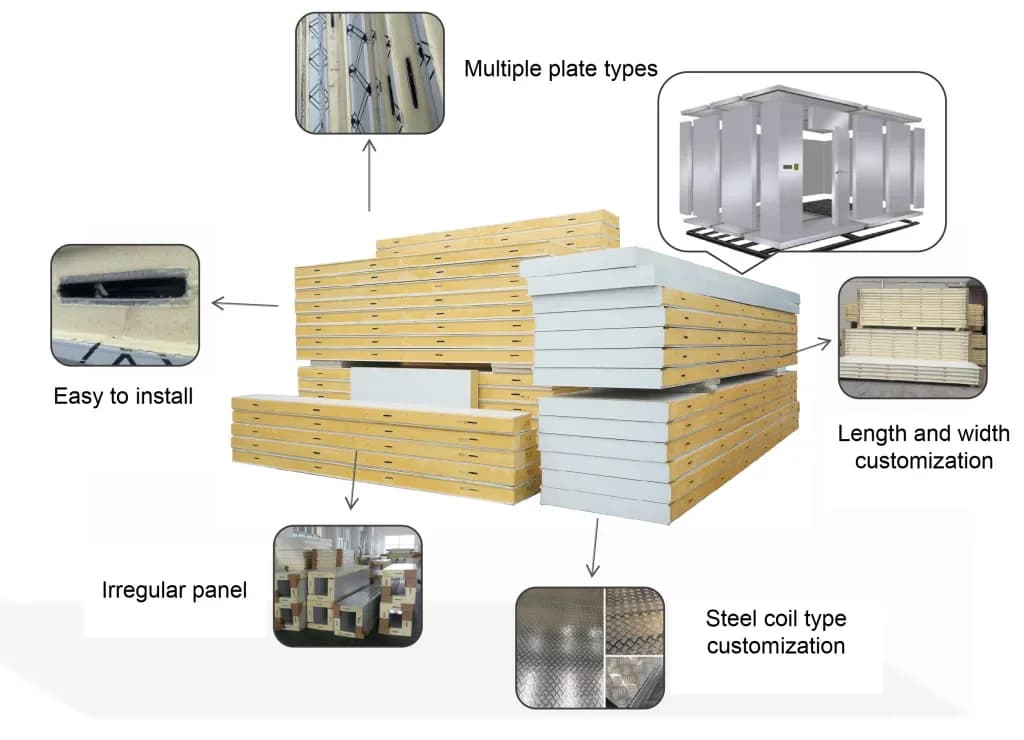
Polyurethane (PU) foam panels are the industry standard for commercial cold rooms in Australia. PU foam has a thermal conductivity of approximately 0.022 W/mK and provides excellent structural rigidity. It is resistant to moisture absorption and maintains its insulating properties over decades.
Expanded Polystyrene (EPS) panels are lower cost but significantly less effective — with a thermal conductivity of approximately 0.038 W/mK, you need nearly double the thickness to achieve the same R-value as PU. EPS is not recommended for freezer applications.
Polyisocyanurate (PIR) panels offer slightly better thermal performance than standard PU and are preferred for deep freeze and pharmaceutical applications. PIR panels typically cost 15–20% more than PU but deliver the best long-term energy performance.
Understanding R-Values and Thickness Requirements
R-value measures thermal resistance — the higher the R-value, the better the insulation. For coolrooms operating at 0–5°C, a minimum of 100mm PU panels (R-value approximately 4.5) is standard. For freezers at -18°C to -25°C, 150mm PU panels are recommended.
Floor insulation is often overlooked. For freezers, inadequate floor insulation leads to frost heave — where moisture in the substrate freezes and expands, cracking the floor slab.
Panel Facings and Food Safety
The outer facing of cold room panels must be smooth, impervious and easy to clean. Food-grade stainless steel (Grade 304) is the premium option — required in meat preparation and processing environments.
All panel joins should be sealed with food-grade sealant and coved at floor junctions to a height of 50mm minimum. This is a HACCP requirement checked during food safety audits.
Cost vs. Lifetime Value
A 200sqm coolroom built with standard 100mm PU panels might cost $8,000–$12,000 less than the same room built with 150mm PIR panels. However, the thinner panel room will typically cost $3,000–$6,000 more per year to run in energy costs.
When commissioning a new cold room, always ask your builder to provide a lifecycle cost comparison across panel options. Acro Refrigeration provides this analysis as part of our standard quoting process.
Need expert advice for your business?
Our technicians are available 24/7 for emergency repairs, preventative maintenance and cold room builds across Brisbane, Gold Coast and the Sunshine Coast.
Related Articles
Refrigeration Emergency? We're On Call 24/7.
Don't lose stock to a breakdown. Call now or book a maintenance plan to prevent it happening in the first place.